
The shelfware problem
The quietest failure is tools installed but not operated. They create false confidence while unmanaged devices stay in the path.
Three disciplines. One architecture. Zero gaps.
The expertise to design it. The engineers to run it.
24/7 US-based operationsArrow enforces endpoint policy and response on laptops, desktops, and mobile devices, operated from the same floor that watches your network, identity, and cloud.
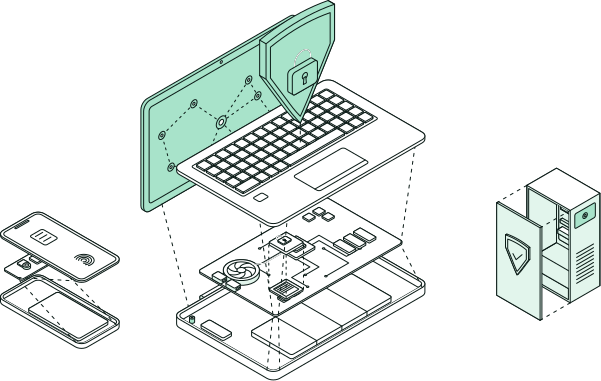


We enforce policy on every laptop, desktop, and mobile device.

We contain and respond directly at the endpoint.

Operated from the same floor that watches network, identity, and cloud.
Because the hard perimeter is gone. Laptops and phones carry credentials, cached data, and paths into apps that used to sit behind an office wall, and network controls alone don’t cover a laptop that isn’t on the office path.
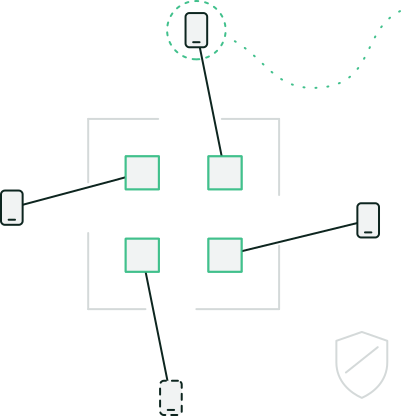
The quietest failure is tools installed but not operated. They create false confidence while unmanaged devices stay in the path.
Adversaries establish footholds through initial access and reconnaissance before anyone reads an alert.
Ransomware and malware still arrive through everyday workflows, wherever the device happens to be.
Endpoint Security here means coverage and operated response for the devices that touch your estate, run on the same floor as network and identity, by people who already know your circuits.
What Arrow delivers
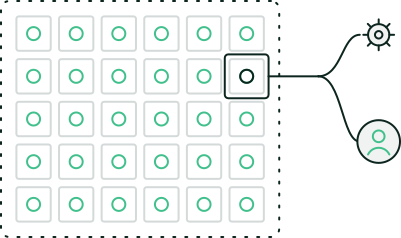
Detection that focuses on the tactics that matter early, like initial access, reconnaissance, and lateral movement, as well as known malware signatures. When something fires, you get root cause and scope in plain language.
Fit
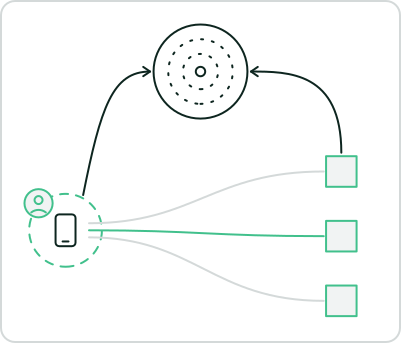
Endpoint Security feeds Threat Management. Network Security and Remote Access [SASE] shape how devices reach apps, and Identity Security explains who is on the device. Arrow keeps those surfaces on one floor, so containment isn’t a three-vendor negotiation while an incident spreads.
Why Arrow
Pure endpoint vendors often can’t see your circuits. Pure network partners often treat devices as someone else’s problem. Arrow puts endpoint policy and response with the people who already operate your connectivity and cloud.
Recommendations stay vendor-neutral, and many programs start by closing coverage and configuration gaps in the tools you already license before buying another shelf of controls.






The devices that use the network,
watched by the people who run it.
Coverage follows risk. These are the gaps the program is built to close.



Lessons from endpoints improve identity, messaging, and network controls. Endpoint work is part of one program.
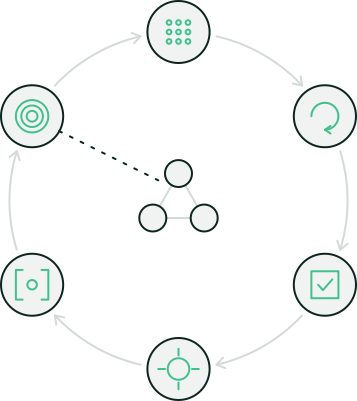

Map the device footprint
We map every device that actually touches the estate and sits in the path to your apps, including the hard-to-enroll ones.

Close unmanaged gaps
Unmanaged devices come under policy, and that policy follows the machine off-network.

Enforce policy
Operated controls on laptops, desktops, and mobile, tuned by engineers who already know how your sites and users work.

Monitor and hunt
We watch for early adversary activity like initial access, reconnaissance, and lateral movement, along with known malware hashes.

Contain and recover
Automated actions where it’s safe, named operators when judgment matters. Recovery and hardening follow containment.

Feed posture back
What endpoints teach us improves identity, messaging, and network controls across the rest of the program.
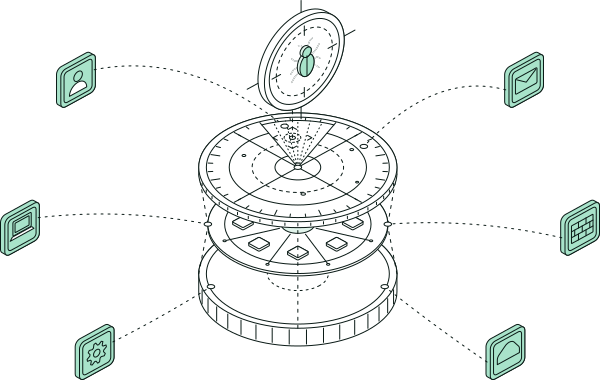
Detection and response from the same operators, every time.
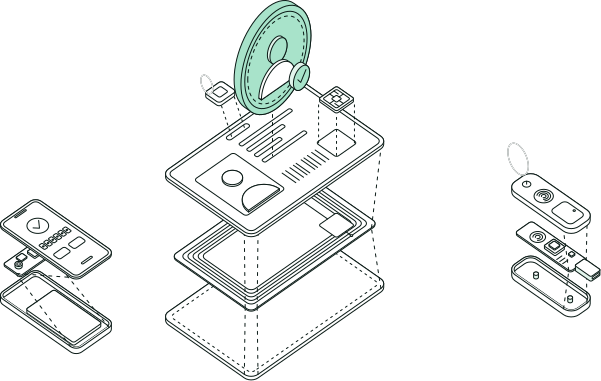
Access policy that follows the user, watched by the same floor.
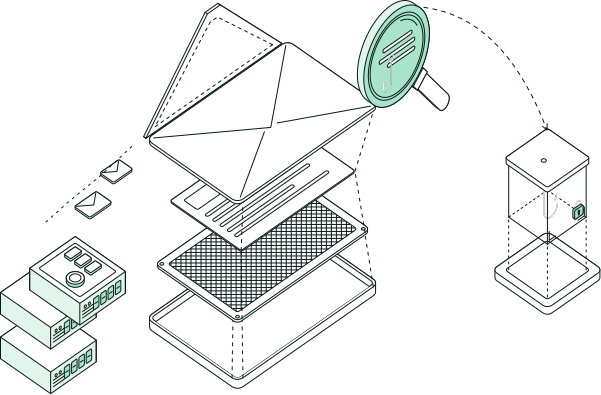
Layered email defense, tuned continuously as threats change.
Hardened firewalls and segmentation across the fabric you run.
Operated Microsoft security controls across identity, endpoint, and cloud when Microsoft is your main stack.
Laptops, desktops, and mobile devices that touch the estate, including the ones that were hard to enroll. Coverage follows risk.
The platform is the one the environment needs, operated with network and cloud. Recommendations stay vendor-neutral.
Policy follows the machine. Network controls alone do not cover a laptop off the office path, so endpoint and remote-access design have to agree.
Named engineers on the same floor that watches network and cloud, so response is not a handoff between three vendors while the incident spreads.
Yes. Many programs start by closing coverage and configuration gaps on what you already license before buying another shelf of controls.