
Deploy and scale
Add branches without a new science project at every site, with zero-touch provisioning where the design calls for it.
Three disciplines. One architecture. Zero gaps.
The expertise to design it. The engineers to run it.
24/7 US-based operationsArrow replaces fragile, appliance-heavy WANs with one software-defined overlay. Networking and security share a single policy plane, running over the circuits we already source for you.
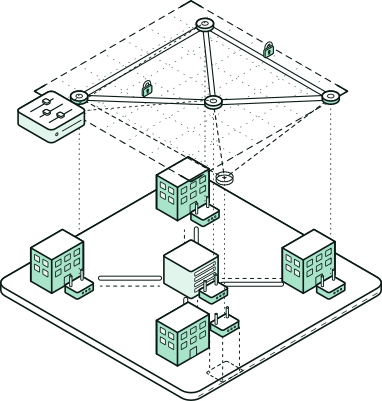
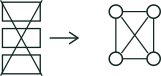
We replace fragile appliance stacks with a flexible software overlay.

Networking and security share one policy plane.
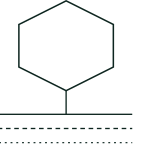
It runs over the circuits we already source for you.
Secure SD-WAN is a software-defined overlay across all of your circuits with security policy built in, so routing, application performance, and protection are managed in one place. Arrow designs it vendor-neutral, with fewer blind spots and clear accountability when something breaks.
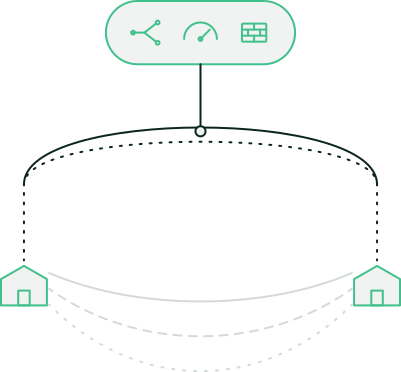
Add branches without a new science project at every site, with zero-touch provisioning where the design calls for it.
Routing, security, and application policy set once and applied to every site.
Clear observability across sites and circuits, so troubleshooting starts in one place.
Vendor-neutral, standards-based, and built to stay up. Here is what changes when the overlay is designed around your estate.
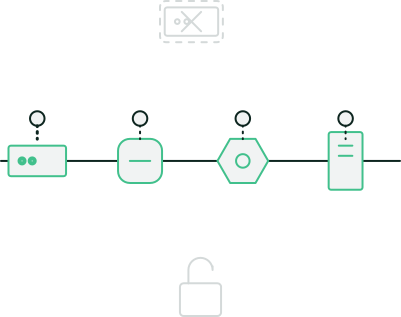
Standards-based
Arrow recommends and operates SD-WAN that fits your estate. Standards-based design means you are not forced into extra routers or a locked stack to get an operable overlay.
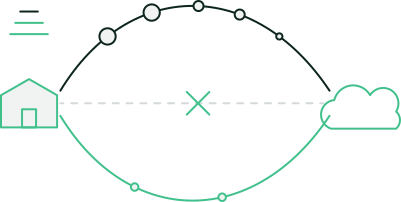
Resilience
By steering traffic across more than one path. When a circuit degrades or drops, sessions move to the healthy path, and changes don’t wait on a carrier truck.
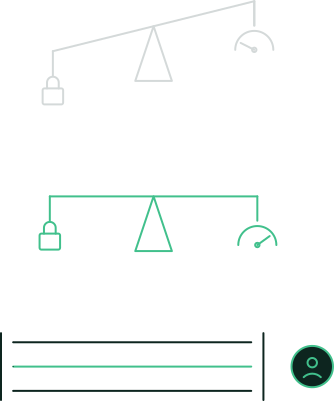
Security and performance
Legacy networks force a choice. Arrow Secure SD-WAN steers critical applications, segments risk, and keeps policy with the same team that watches Internet Access and Remote Access [SASE].
Fiber, broadband, fixed wireless, and LTE from 600+ providers, designed together with the overlay from the start.










Every site. Every circuit.
One policy plane.
Leave rigid MPLS without a forklift, modernize a mixed-circuit WAN, and bring remote users onto the same policy.

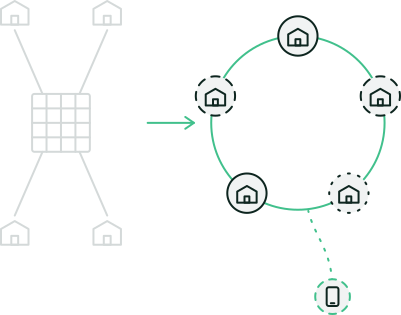


Success criteria are written per phase, so operations can absorb each change.
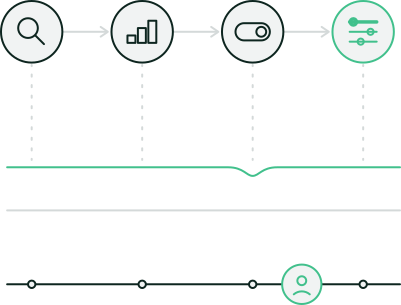

Discovery and readiness
Sites, circuits, hardware, and security needs are mapped. Discovery decides what to keep, what to retire, and what has to change for an operable overlay.

Phased migration
Sites move in planned waves, each with written success criteria, so nothing moves before the last wave is proven.

Low-disruption cutover
Cutovers land in agreed windows, with legacy paths kept in place until the overlay is carrying production traffic.

Post-deployment tuning
A named implementation engineer tunes paths and policy after go-live, then hands over to your team or to Managed Secure SD-WAN.
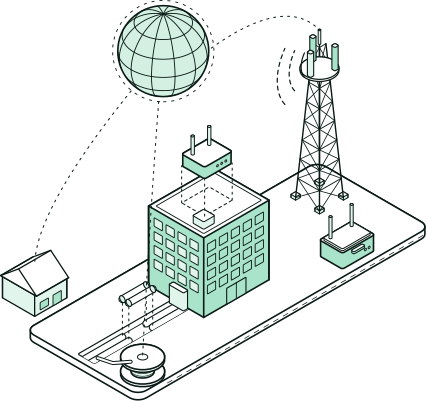
Primary, failover, temporary, and pop-up circuits from 600+ providers.
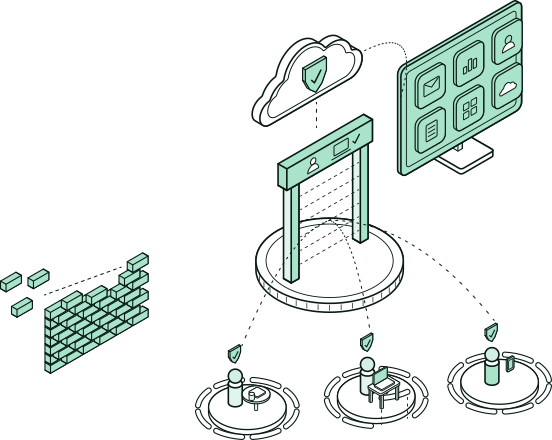
Identity-aware access with continuously checked posture.
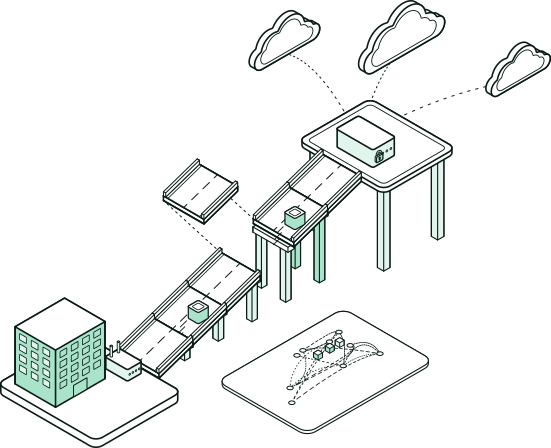
Private, adjustable paths to AWS, Azure, and Google Cloud.
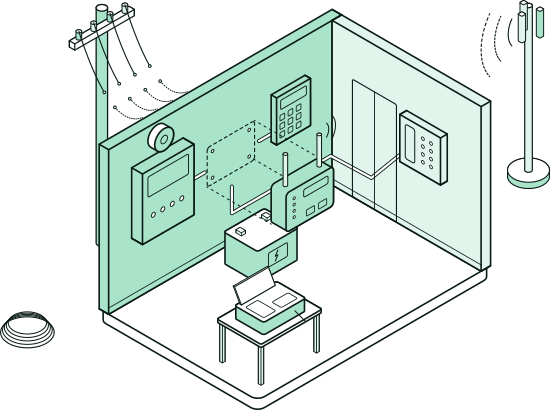
Retire copper and fax on a planned cutover schedule.
Arrow operates the overlay and the circuits, with the same engineers who designed it.
No. The design integrates into what you already run when a rip-and-replace is not the point. Discovery decides what to keep, what to retire, and what must change for an operable overlay.
MPLS is a private carrier network with fixed paths and slow change cycles. SD-WAN is a software overlay that steers traffic across whatever circuits a site has, including broadband and fixed wireless. Many estates use SD-WAN to leave MPLS, or run both during migration.
The one that fits your estate. Arrow chooses based on your sites, existing hardware, security needs, and how the overlay will be operated.
Secure SD-WAN is where Arrow designs your overlay. Managed Secure SD-WAN is where Arrow runs it, with the circuits. Many customers do both in sequence with the same Arrow engineers.
Yes. Remote Access [SASE] sits on the same policy plane when remote users are in scope, so branches and remote workers are not two arguments with two vendors.
Discovery, a phased migration, a low-disruption cutover, and tuning with a named implementation engineer. Success criteria are written per phase so operations can absorb the change.
The design covers how the overlay and circuits work together. If you want Arrow to operate both, that’s Managed Secure SD-WAN.