
Your security staff stay in the decisions
Co-managed models keep the decisions that should stay internal with your owners, while Arrow runs daily monitoring, prioritization, and recovery.
Three disciplines. One architecture. Zero gaps.
The expertise to design it. The engineers to run it.
24/7 US-based operationsArrow operates identity, endpoint, and cloud security controls inside the Microsoft estate you already pay for, including XDR-style protection across Windows, macOS, iOS, and Android devices, aligned with the network and connectivity we run.

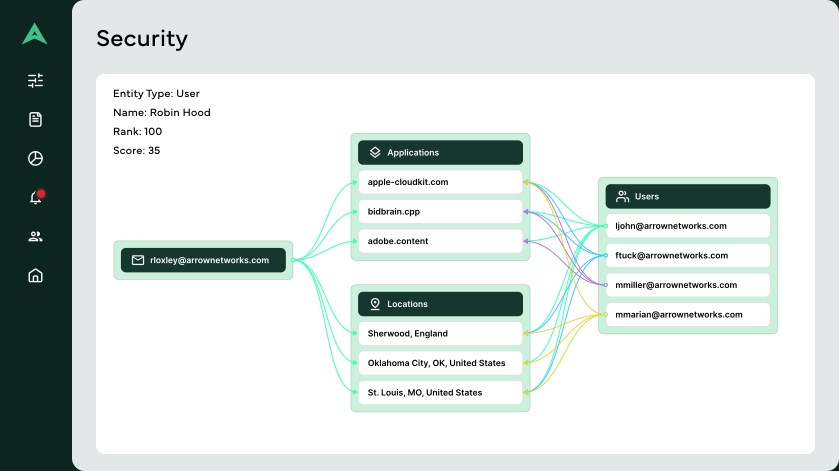
Organizations buy controls and never tune them. Alerts land in a queue that meets the tenant cold, and vulnerability and misconfiguration debt piles up while the business assumes “we have Microsoft security.” Managed Microsoft Security puts operators on the stack you already pay for, and leaves you with this.
Co-managed models keep the decisions that should stay internal with your owners, while Arrow runs daily monitoring, prioritization, and recovery.
The identity, endpoint, and cloud controls you already pay for, configured, watched, and remediated by Arrow as ongoing operations.
Response stays with named engineers who already know your tenant.
Non-Microsoft tools aren’t removed by default. Replacement is a design decision when a tool can’t do the job.
Pure Microsoft shops often can’t see your circuits, and pure MSSPs often can’t change the Microsoft estate they alert on. Arrow keeps your controls aligned with the network it runs, so network telemetry informs response.
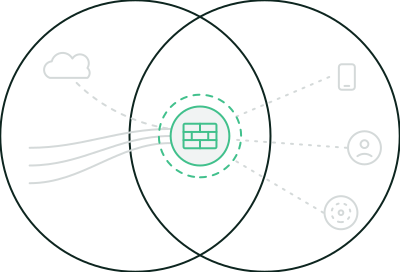
Identity, endpoint, and cloud security controls inside the Microsoft estate, operated continuously by Arrow.
Software vulnerabilities and misconfigurations discovered and ranked by business risk, so you get a prioritized work list.
Automated investigation and remediation examine alerts and help you get back to a known-good state, with operators in the loop when judgment matters.
XDR-style protection on endpoint and related signals across Windows, macOS, iOS, and Android, run by named operators.
Protection for environments that span cloud and platforms, with threat intelligence and Arrow expertise behind it.
Threat Management covers detection and response beyond Microsoft signals, and Managed Microsoft 365 runs broad productivity and collaboration operations.
We start with what’s licensed versus what’s configured and watched. Hardening follows under change control, and ongoing operations stay with named engineers.
Licensed versus configured, critical assets, and where alerts go today.

The identity, endpoint, and cloud controls that matter most, under change control.

Ongoing monitoring, vulnerability and misconfiguration priority, and recovery with operators in the loop.

Secure SD-WAN, Internet Access, and Remote Access [SASE] when those are Arrow-run.

MDR for Microsoft for hunt and response depth. Threat Management for multi-surface work.

Two separate services on the same estate. Many estates run both.
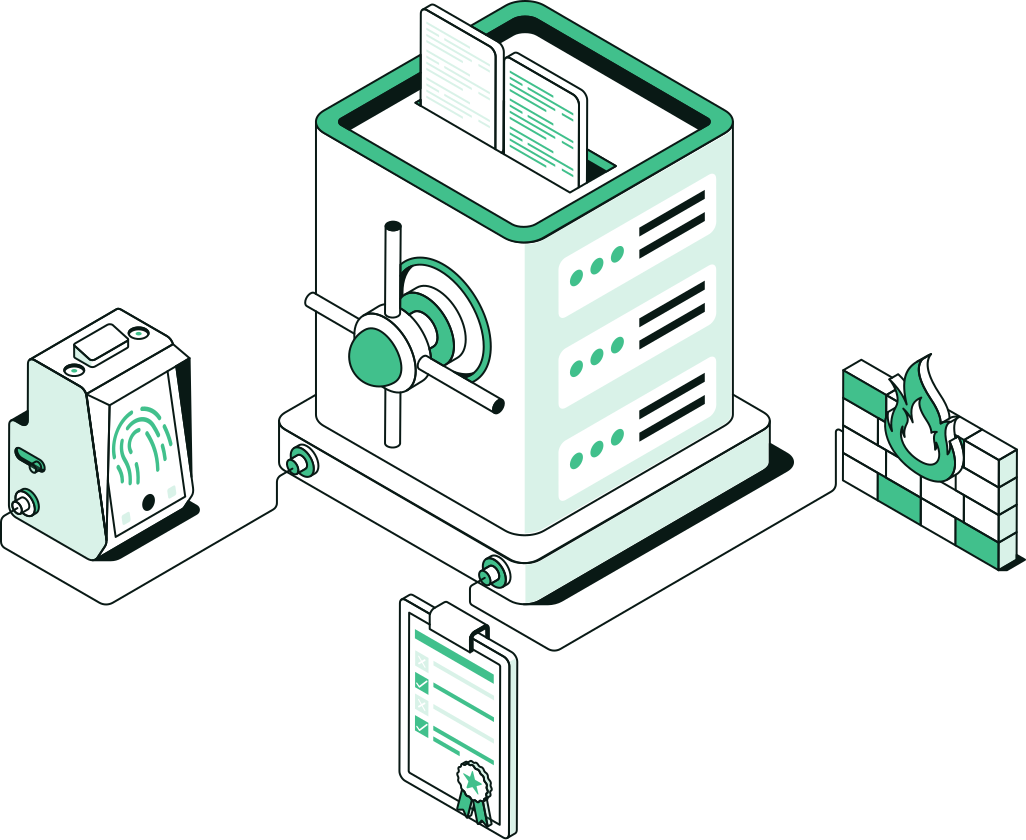
Choose it when the controls are licensed but not configured, tuned, or watched.
Arrow configures and operates identity, endpoint, and cloud security controls: the “licensed versus operated” problem.
This page

Choose it when you need people on the signals those controls produce.
Alert review, hunting, and response on Microsoft signals: the “alerts versus outcomes” problem.
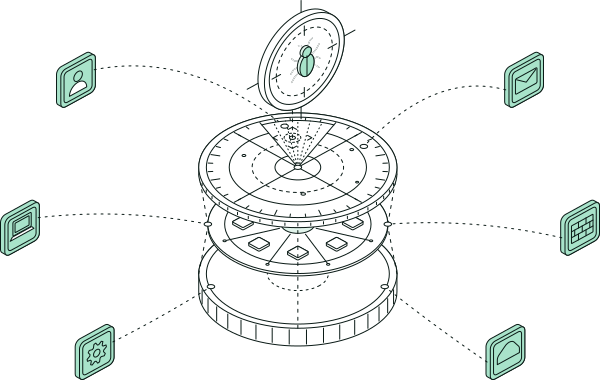
Detection and response from the same operators, every time.
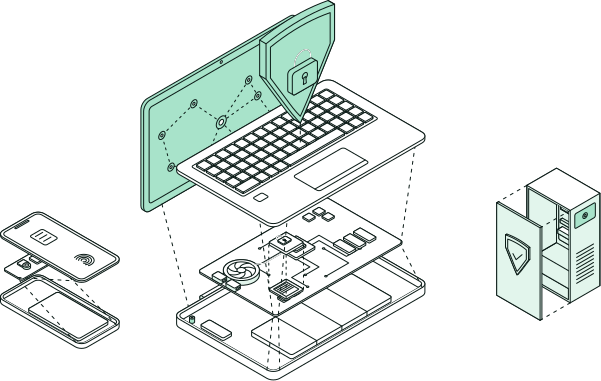
Operated policy and response on every device that touches the estate.
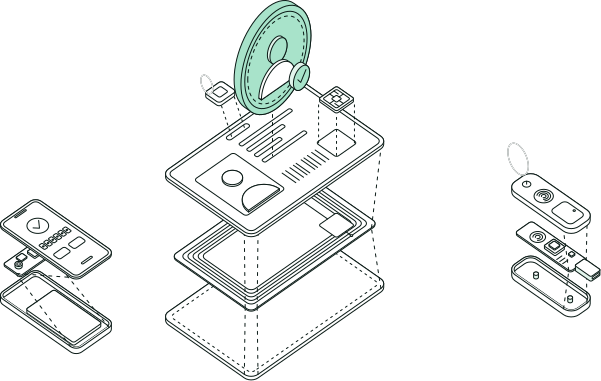
Access policy that follows the user, watched by the same floor.

Ongoing operations across Microsoft 365 on a named team.
Seat, app, and access hygiene as the organization changes, alongside the controls Arrow operates.
No. It is the ongoing operation of identity, endpoint, and cloud security controls inside the Microsoft estate you already pay for. The stack stays configured, watched, and remediated long after purchase.
Endpoint and related signals across the platforms actually in the estate (Windows, macOS, iOS, and Android) under named operators. Coverage follows what you run.
This service operates the control set those signals depend on. MDR for Microsoft is the detection-and-response companion: alert review, hunting, and response on Microsoft signals. Use both when you need operated controls and human-led outcomes on the same estate.
Not by default. Microsoft controls are operated where they are the right tool for the tenant. Replacement becomes a design decision only when a tool cannot do the job.
Identity, endpoint, and cloud controls stay aligned with Secure SD-WAN, Internet Access, and Remote Access [SASE] when those are in scope, under one architecture and one accountable team. Network telemetry informs response; security policy shapes how the estate is run.
Whether the stack is configured or only purchased, which vulnerabilities and misconfigurations matter most, where alerts go today, and who is actually watching them. The goal is an operated program with ranked work.
Yes. Co-managed operating models are scoped so internal owners keep the decisions that should stay internal while Arrow operates daily monitoring, prioritization, and recovery with engineers in the loop.