
Continuity with your team
We work alongside your team. The people who sequence the change share one culture with Arrow operators and stay accountable when it’s live.
Three disciplines. One architecture. Zero gaps.
The expertise to design it. The engineers to run it.
24/7 US-based operationsArrow modernizes legacy estates and optimizes what you already run, reducing technical debt without disrupting the business that depends on it. Phased deliverables, continuity with your team, and tuning that continues after go-live.

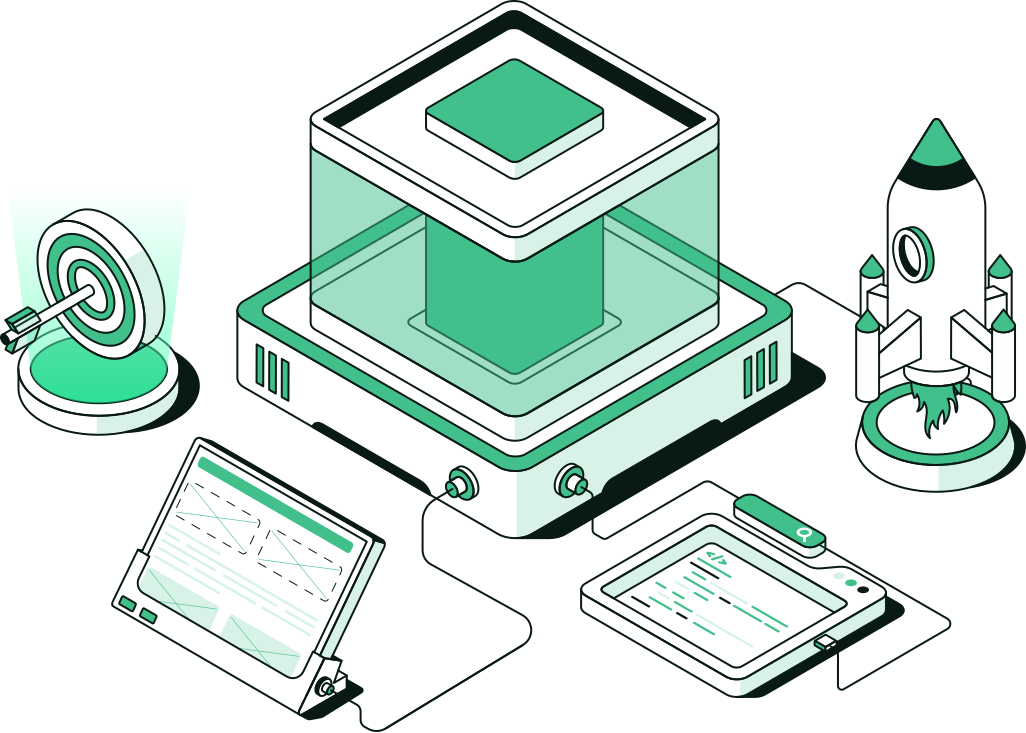
Estates collect appliances, overlapping tools, and exception-based networks because the last project optimized for a go-live date and never planned how the floor would run after go-live. Renewal cycles replace hardware without fixing the operating model, and optimization that stops at deployment leaves the next incident to reinvent the same work. Modernization with Arrow is built to leave these behind instead.
We work alongside your team. The people who sequence the change share one culture with Arrow operators and stay accountable when it’s live.
Each phase has a deliverable and a success gate, so benefit arrives in steps operations can absorb, and no single weekend window carries the whole estate.
Proven patterns stay in place until their replacement is proven under load, so the path that carries the business stays up.
Technology reviews and recommendations continue after the project closes, so the work doesn’t vanish at signature.
What to retire, what to keep, and what to redesign, with owners and exit criteria on each. Fit drives the order, and preferred-agreement defaults stay off the table.
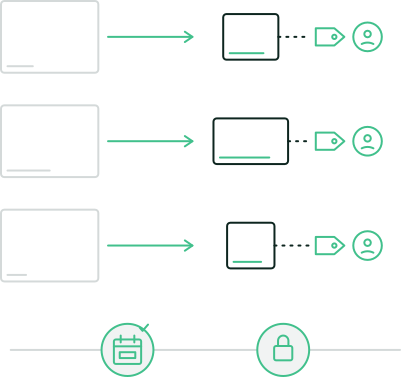
Professional Services work on the live estate, ranked by business impact and operational risk so each phase leaves it more operable than before.
Network and security patterns that no longer match how you work, retired or redesigned in order.
Appliances and overlapping controls that create blind spots, mapped before anything is retired.
Problems the design created, fixed in the design.
A refresh that covers the operating model as well as the hardware.
Network, security, and related infrastructure stay in one plan when the problem spans silos.
Implementation stays with named engineers, and post-go-live reviews keep recommendations moving, so modernization isn’t a project that vanishes at signature.
What carries traffic and risk today, checked against what the diagram says.

Retire, keep, or redesign, ranked by business impact and operational risk, with owners and exit criteria.

Deliverables operations can absorb, with rollback expectations written down.
Prove the new pattern, then document it so the floor inherits it.

Technology reviews and recommendations continue, with an optional path into Managed Services.

Many programs need both. Start with the one that matches the primary work.
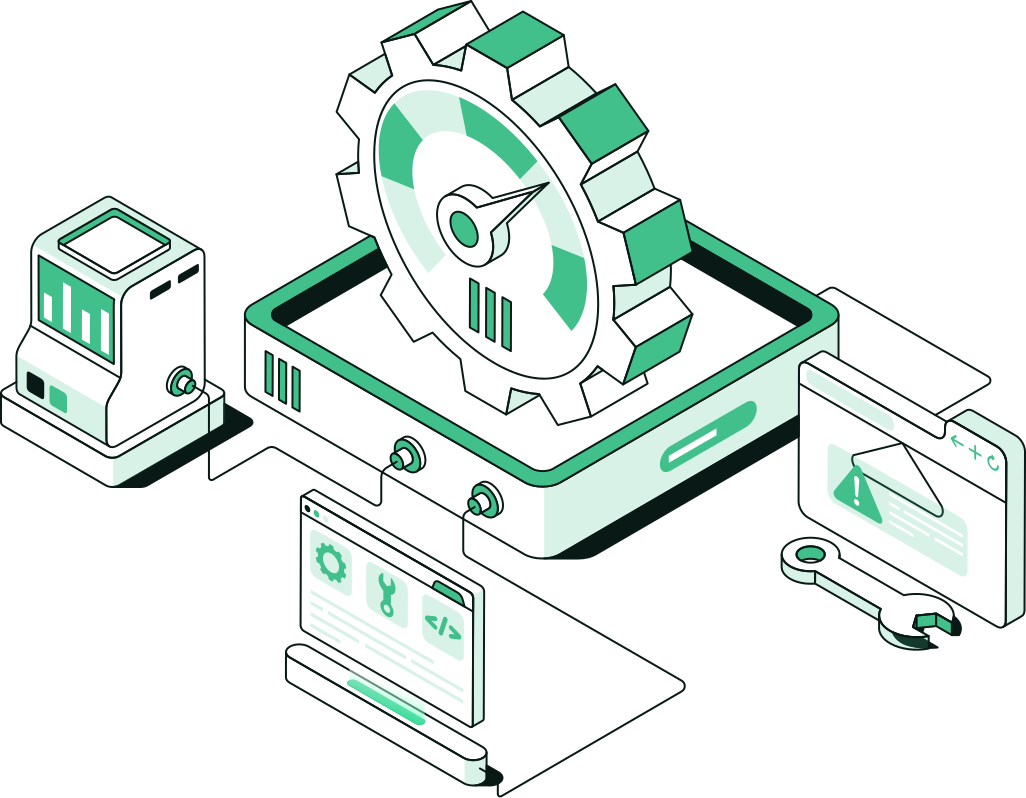
Choose it when the work is refactoring the estate you already run, in place.
Network, security, and ops patterns refactored on the live estate as Professional Services work, with continuity kept with your team.
This page
Choose it when the primary work is moving a cloud portfolio.
Workloads moved and modernized into and across cloud, with landing zones and wave cutovers, as part of Cloud Solutions.
Cross-estate advisory for network, security, and cloud.
A path from current posture to an operable control set.
Named leadership without a full-time hire this quarter.
Hardened firewalls and segmentation across the fabric you run.
A common landing point after fabric modernization: Arrow runs the overlay and the circuits as one owner.
The approach is phased so the path that carries the business stays up while technical debt comes out. Arrow keeps proven patterns until replacements are proven, and sequences change at a pace operations can absorb. No single weekend window carries the whole estate.
No. Each phase has a deliverable and a success gate you can absorb. You capture benefit incrementally: retire fragile patterns, keep what works, and redesign only where the operating model demands it.
No. Technology reviews and recommendations continue after go-live. Optimization is invested in how the estate will run for years after the cutover.
Network, security, and related infrastructure stay in one plan when the problem spans silos on the live estate. When the primary work is moving a cloud portfolio in waves, start with Migration & Modernization instead; Modernization & Optimization refactors the estate in place.
Fit drives the sequence: what to retire, what to keep, and what to redesign, with owners and exit criteria. Preferred-agreement defaults stay off the table. Fragile patterns get replaced; proven ones stay until the replacement is proven under load.
When Managed Services or Advisory & Engineering already touch the estate, modernization inherits that context, so ongoing operations shape the design from the start. Optional path into Managed Services keeps the same accountability culture after the project phases close.