
Takeover looks like a normal login
Account takeover and credential misuse look like ordinary sign-ins until money or data is already gone.
Three disciplines. One architecture. Zero gaps.
The expertise to design it. The engineers to run it.
24/7 US-based operationsArrow runs managed identity programs across the lifecycle: who gets access, under what conditions, how it’s reviewed, and how quickly it’s removed when roles change.
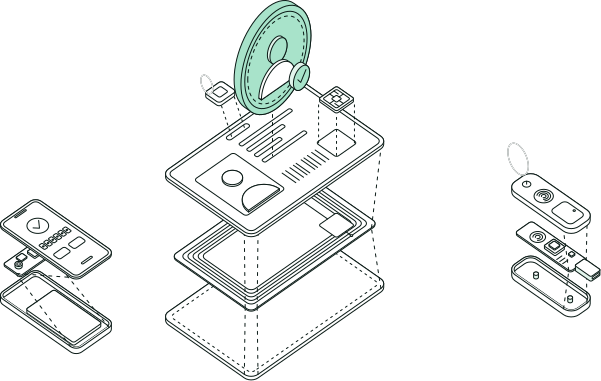


Access policy follows the user as well as the device.
We detect compromise early and respond on one floor.
The same floor also runs your messaging and endpoint security.
Identity stacks grow reactively, and access doesn’t keep up. Over-privileged and orphaned accounts pile up because joiner-mover-leaver work is still manual and late, and SaaS access sprawls without a single owner.
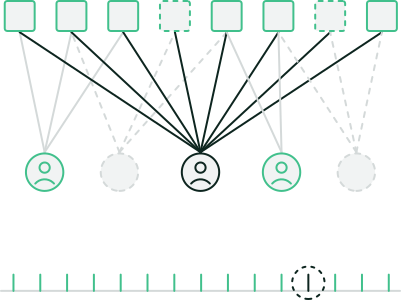
Account takeover and credential misuse look like ordinary sign-ins until money or data is already gone.
Latency in leaver processing is a security incident waiting to happen.
The result is a control plane nobody can defend to auditors or operate at 2 a.m.
Hybrid work made “who can sign in, and under what conditions” the real control plane. Arrow designs access for how people actually work, then keeps it running.
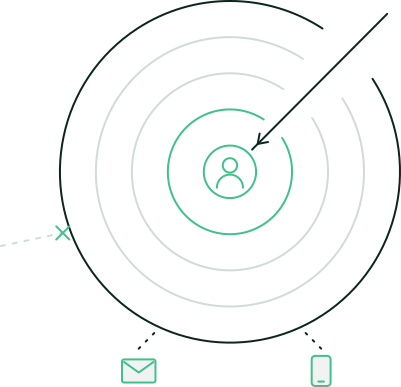
What Arrow delivers
Conditional access matched to how people work, so policies stay on and the business keeps running. Compromise detected with context from messaging and endpoint, beyond failed-login noise. Lifecycle and review on a cadence operators can run.
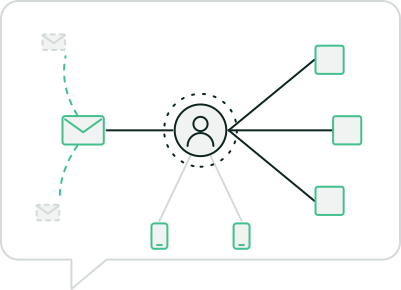
Messaging and remote access
Mailbox takeover, malicious forwarding, and unauthorized delegation are identity events that show up in mail, so Messaging Security runs on the same floor. Remote Access [SASE] depends on identity and posture to decide who reaches apps from anywhere. Arrow keeps these programs connected, so response is one conversation.
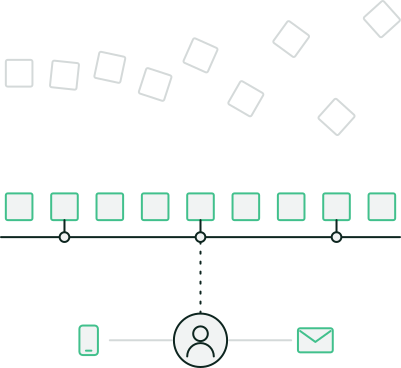
Why Arrow
Tooling without lifecycle and review becomes drift. Arrow runs identity with the operators who also see endpoint and messaging signals, so access decisions and incident response share context.

The user is the boundary.
Identity is the perimeter.
Identity is operations work that runs all year. These are the moments the program is built around.

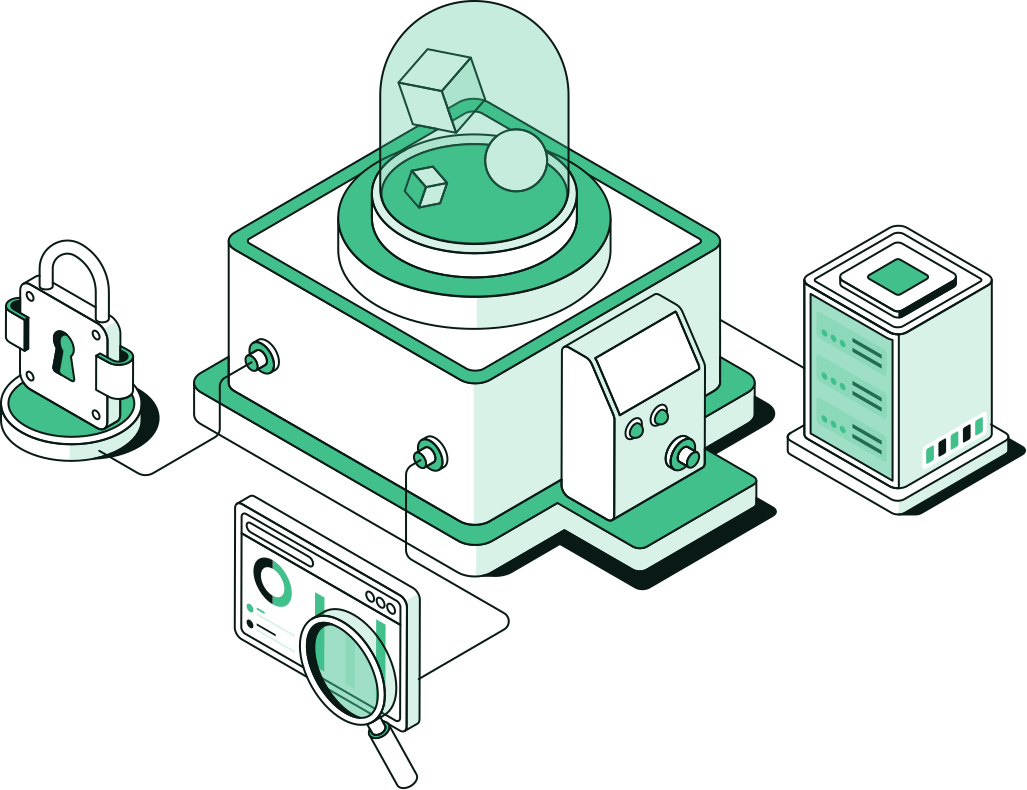


Each step lands with change control and runs on the same floor as messaging and endpoint security.
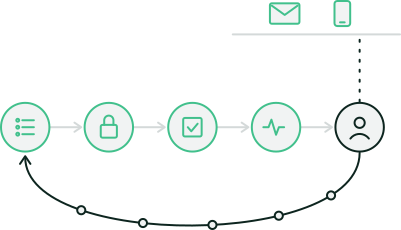

Inventory
We inventory identities and critical apps to see what people can actually reach.

Design access policies
Least privilege matched to real work, with MFA designed into the sign-in path from the start.

Implement with change control
Controls land without breaking the day, so nobody has a reason to turn them off.

Monitor for misuse
We watch for account takeover and credential misuse, beyond failed-login noise.

Respond on one floor
Messaging and endpoint signals meet the same operators, so an identity incident is one conversation.

Continuous review
A review cadence leadership and auditors can understand, ending in decisions they can act on.
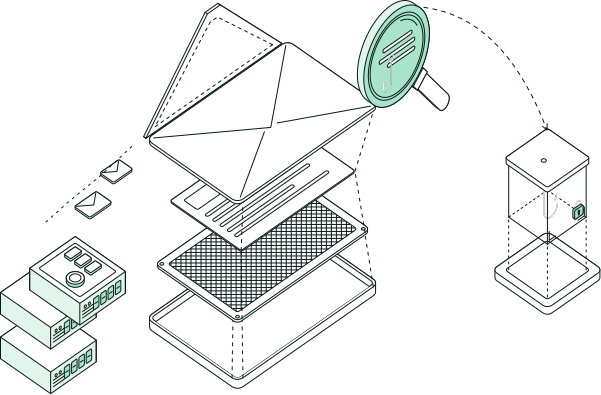
Layered email defense, tuned continuously as threats change.
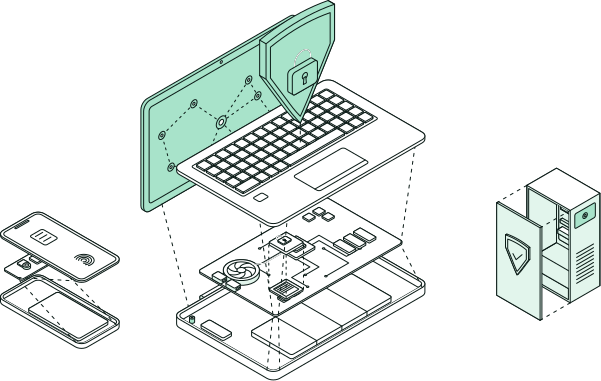
Operated policy and response on every device that touches the estate.
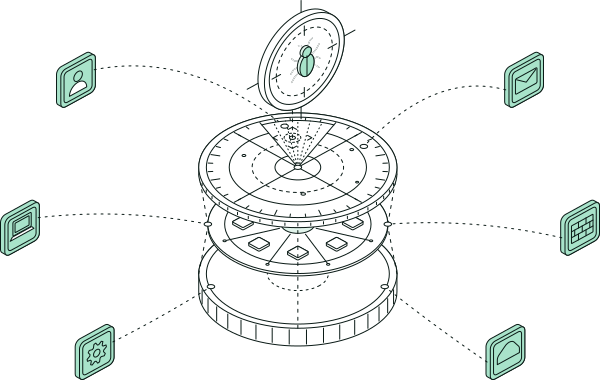
Detection and response from the same operators, every time.
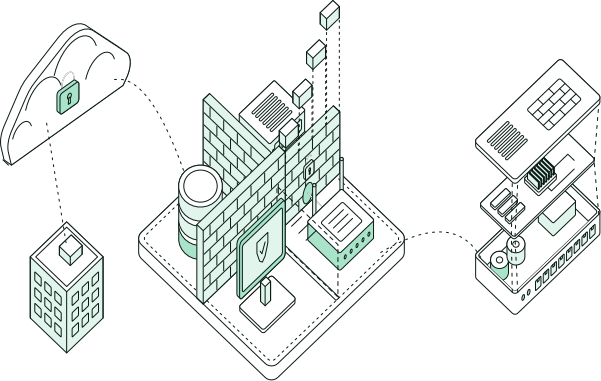
Hardened firewalls and segmentation across the fabric you run.
Microsoft-specific depth for identity, endpoint, and cloud controls when the Microsoft stack is in scope.
Who gets access, under what conditions, how access is reviewed, and how quickly it is removed. Identity is operations work that runs all year.
Yes. Sign-in is designed around how people work, with MFA built into the path as a control from the start.
Joiners, movers, and leavers are continuous operations. Stale accounts are not left for an annual cleanup after someone has already retained access they should not have.
SASE and identity are one story. The user is the boundary, and remote access policy is built with the identity program.
Yes. Over-privileged and orphaned accounts are a common starting point. Cleanup is often the first operable win before broader program work.
Only if it cannot support the policy you need. Operating and hardening the directory you have is often the work, and replacement is a design decision made later if needed.